
Philanthropic Projects Manager
5 min read
Nature risk is business risk
Climate change and nature loss are often discussed as separate environmental challenges. For businesses, however, they are increasingly converging into the same operational reality: damaged assets, disrupted supply chains, scarcer resources and rising costs.
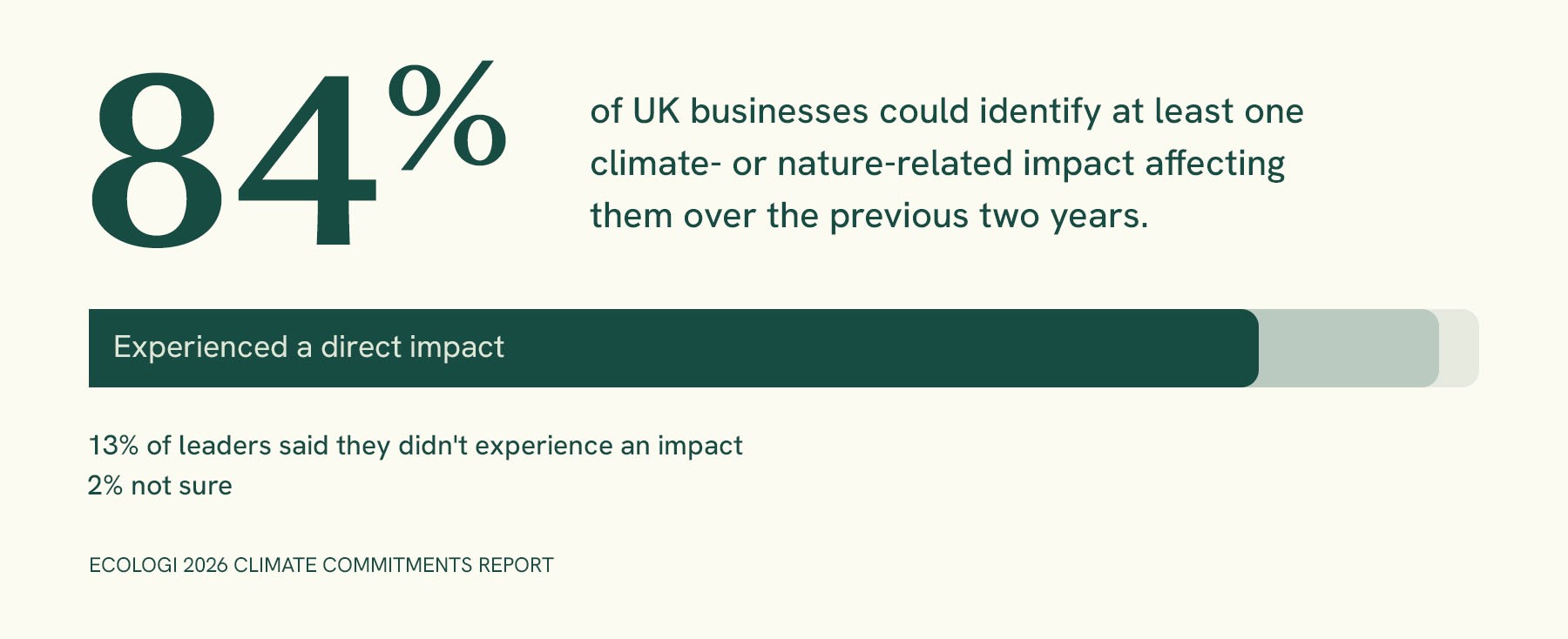
The effects are no longer hypothetical. Ecologi’s 2026 Climate Commitments Report found that 84% of UK businesses could identify at least one climate- or nature-related impact affecting them over the previous two years. Among the businesses experiencing disruption, 70% estimated that it had cost them at least 1% of annual turnover, while 40% put the impact at 6% or more.
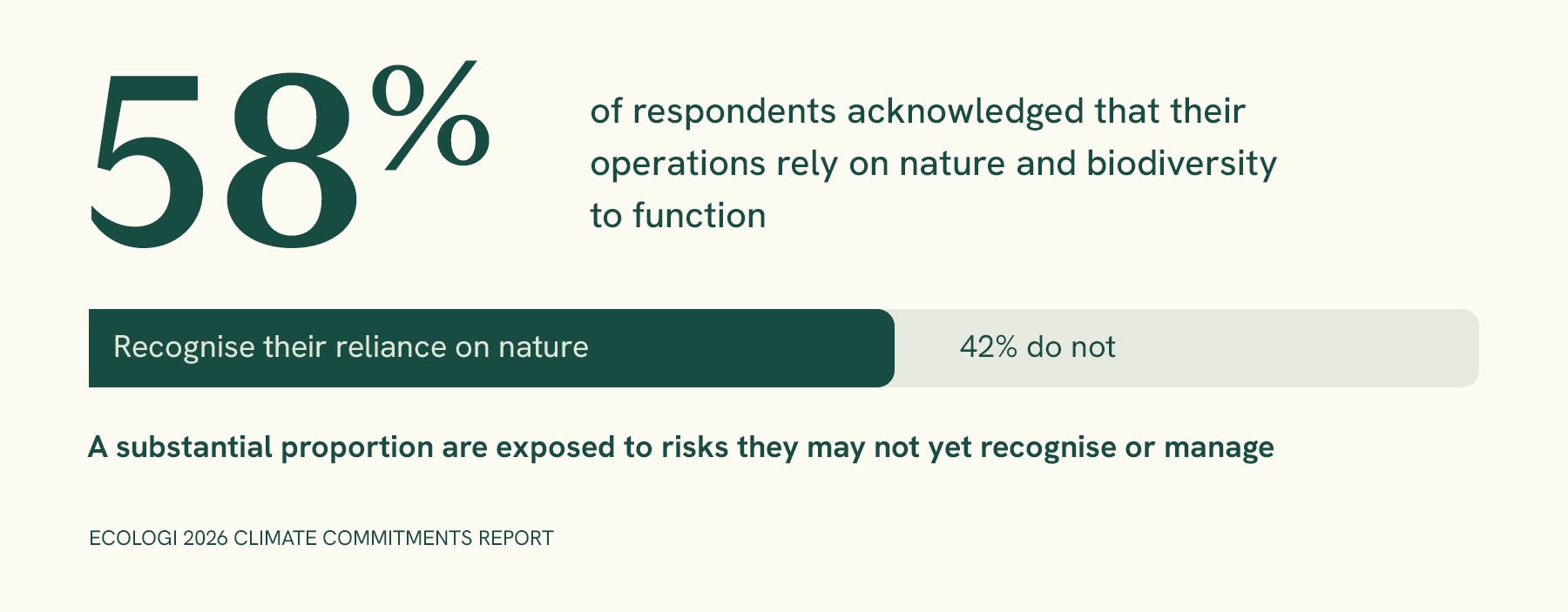
Yet many businesses have not fully connected those financial consequences with their dependence on nature. Only 58% of respondents acknowledged that their operations rely on nature and biodiversity to function, leaving a substantial proportion exposed to risks they may not yet recognise or manage.
This is the nature blind spot in corporate resilience.
Businesses may see a flood, drought or failed harvest as an isolated operational event without recognising the degraded ecosystems, disrupted water cycles or declining biodiversity that can make the damage more severe. The summer of 2026 was the UK’s hottest summer on record according to provisional Met Office data. The higher than average temperatures have been made 130 times more likely due to human-induced climate change, meaning this is not a one-off occurrence; we’re going to see more summers like the one we’ve just experienced. This should be a wake-up call for businesses, driving them to take action before they experience even greater impacts on their turnover.
Ecologi’s 3Rs framework - Reduce, Restore and Report - provides a useful way to think about how businesses can take said action. Businesses must continue to reduce the greenhouse gas emissions and wider environmental pressures driving climate change and nature loss. But reduction alone is not enough. They must also help restore the ecosystems that support their operations and supply chains, and report transparently on the actions they take and the outcomes they achieve.
Originally developed to simplify credible corporate climate action, the 3Rs also provide a valuable foundation for thinking about nature. A resilient business needs to understand and reduce its impacts, invest in the restoration of natural systems, and measure and communicate progress with credibility.
To build meaningful resilience, companies need to look beyond the infrastructure they own and recognise the natural infrastructure on which it depends.
Nature is critical business infrastructure
Every business depends on nature, whether that relationship is immediately visible or several tiers removed through its supply chain.
Companies depend on stable water supplies, functioning soils, predictable weather, pollination, raw materials and ecosystems capable of regulating floods, heat and drought. Even businesses that consider themselves largely digital or service-based still rely on physical buildings, energy, telecommunications infrastructure, transport systems, employees and suppliers that are exposed to environmental disruption.
When those natural systems deteriorate, the consequences spread rapidly into business operations.
Throughout the summer of 2026, wildfires across the UK brought disruption to people’s lives and businesses. Throughout the UK, from the New Forest to the Cairngorms, roads were closed, and hundreds of people living nearby to fires were forced to evacuate their homes while fire crews fought the flames, such as in Llandovery. So serious was the pressure that the fire services were under that the government issued a nationwide wildfire alert using the emergency alert system, urging people not to start fires or use barbecues. Heat also caused "exceptional challenges” for the railways throughout the summer, with passengers encouraged not to travel during the hottest days.
The lesson from this summer is not simply that extreme weather can damage transport infrastructure. It is that the continuity of even a modern economy remains inseparable from the condition of the physical and natural environment around it.
The same is true of commercial property more broadly. While the summer has been extremely hot and dry, the coming autumn and winter are projected to be wetter and windier than average due to the El Niño weather system, the scale of which is said to be unprecedented in modern climate records. Aviva’s flood-mapping data found that almost one in three UK commercial properties was at risk from some form of flooding. Despite this, three-quarters of the SMEs it surveyed did not have a business continuity plan that included climate risk, only 38% had flood insurance and fewer than one in five had introduced measures to improve the flood resilience of their premises.
This gap between exposure and preparedness is becoming harder to sustain. Ecologi’s latest research found that 61% of businesses have now adopted a structured approach to climate resilience, but only 18% had implemented local nature-based solutions over the previous two years.
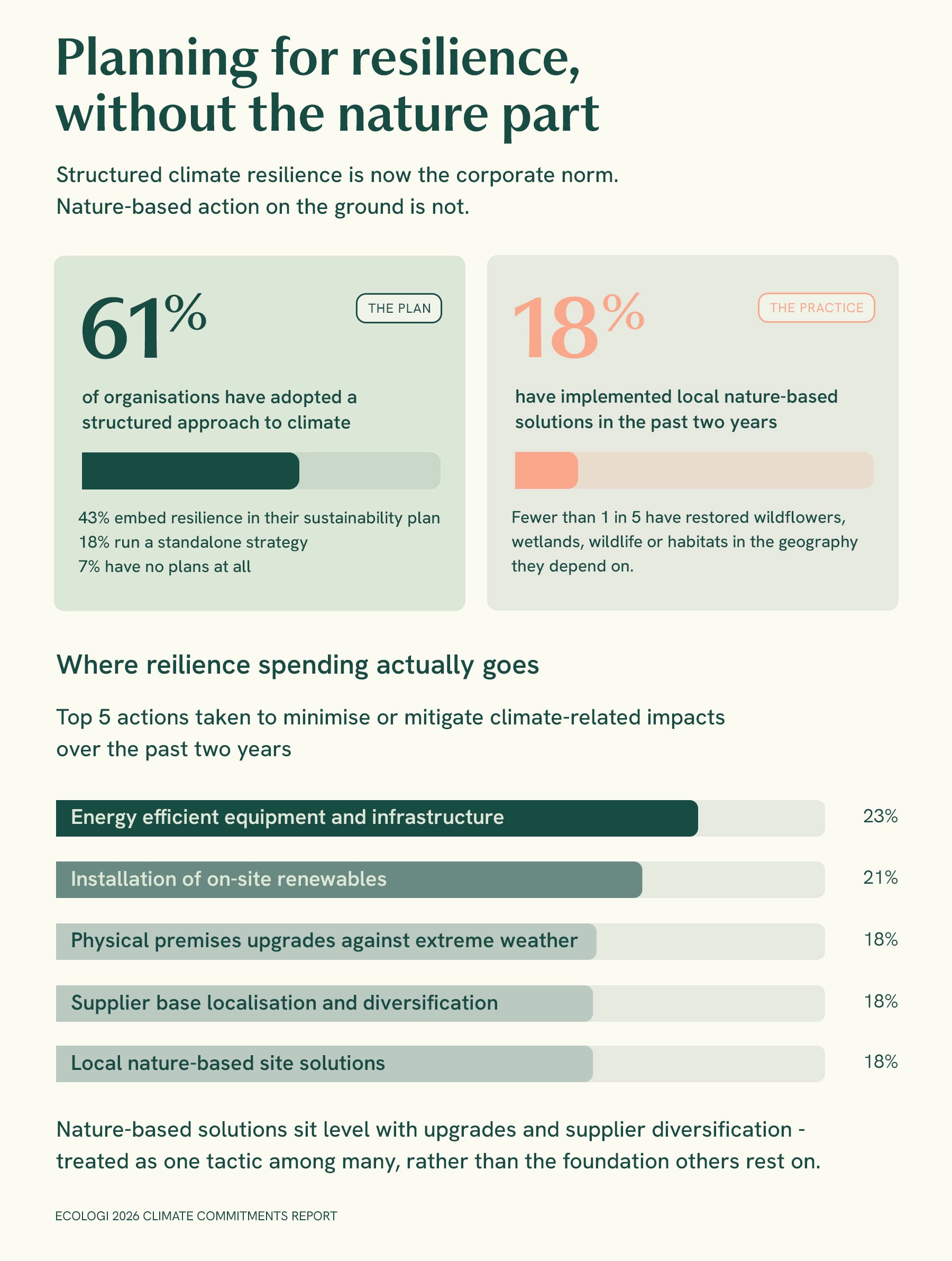
Businesses are beginning to respond to climate risk, but many resilience plans still focus primarily on engineered assets, energy systems and supplier diversification. These interventions matter, but they cannot fully protect a business if the ecosystems surrounding its assets and supply chains continue to deteriorate.
Nature loss reaches businesses through their supply chains
For some companies, the most material nature risks will not sit within their own premises. They will be embedded upstream in the landscapes and communities producing their food, fibres, ingredients, minerals and other raw materials.
The economic impacts of drought illustrate how quickly a local environmental shock can become a global commercial issue. Recent droughts have reduced crop production, constrained energy generation and disrupted major trade routes. Low water levels in the Panama Canal caused shipping traffic to fall by more than a third between October 2023 and January 2024. In Spain, rainfall shortages contributed to a 50% reduction in olive production and a subsequent doubling of olive oil prices. Dry conditions in Thailand and India also affected sugar supplies, contributing to higher prices in overseas markets. And in the UK, estimates for the arable harvest suggest it will be one million tonnes lower than initial projections, with yield forecasts for essential crops dropping to a historic low of 18.5 million tonnes in 2026.
These are not isolated humanitarian or agricultural concerns. They create procurement risk, price volatility, transport delays, reduced margins and, in some cases, product shortages for companies far from the landscapes where the disruption began.
Ecologi’s 2026 Climate Commitments Report reflects this experience among UK businesses. Nearly a third reported increased operating costs linked to energy-price volatility or resource scarcity, 28% experienced higher raw-material costs and 22% reported direct supply-chain disruption.
Supply-chain diversification can help reduce exposure to individual suppliers or geographies. But if the same environmental pressures are affecting water, soils, crops and ecosystems across multiple sourcing regions, diversification alone may not create genuine resilience. Businesses need to understand not only who their suppliers are, but which natural systems those suppliers depend upon and how secure those systems are likely to remain.
Restoration as a core adaptation strategy
When natural systems are degraded, climate hazards become far more damaging to assets, supply chains, and business operations. Climate change and nature loss compound one another: deteriorating natural buffers leave commercial infrastructure and communities directly exposed to severe physical and financial disruption.
This reality shifts the fundamental business case for nature. Restoration is no longer merely an exercise in corporate philanthropy or voluntary social responsibility; it is a critical risk management strategy and a core tool for long-term climate adaptation. Frameworks like the Taskforce on Nature-related Financial Disclosures (TNFD) reflect this shift, helping companies evaluate how dependencies on natural systems directly influence operational resilience and enterprise value.
Crucially, nature-based solutions do not seek to replace engineered assets, but to complement them. Restoring natural infrastructure upstream or across operational landscapes absorbs physical shocks before they reach built assets, mitigating risk in ways concrete structures alone cannot replicate. Connecting site-specific climate risks with targeted ecological restoration provides a vital, landscape-scale layer of protection that strengthens overall business resilience.

Resilience starts close to home
Businesses are beginning to recognise that the ecosystems closest to their operations often provide some of the greatest opportunities to strengthen resilience. Floodplains can reduce the severity of downstream flooding. Peatlands can improve water management and reduce wildfire risk. Urban green spaces can cool towns and cities during periods of extreme heat.
This shift moves the conversation away from nature as an abstract global challenge and towards the specific landscapes that support a business's assets, employees, customers and supply chains.
The examples below illustrate how organisations are beginning to translate these ideas into practical action.
How businesses are building resilience through nature
giffgaff: protecting infrastructure through peatland restoration
For many organisations, resilience begins with understanding how ecosystems influence the infrastructure they depend upon, but also how they can support their customers.
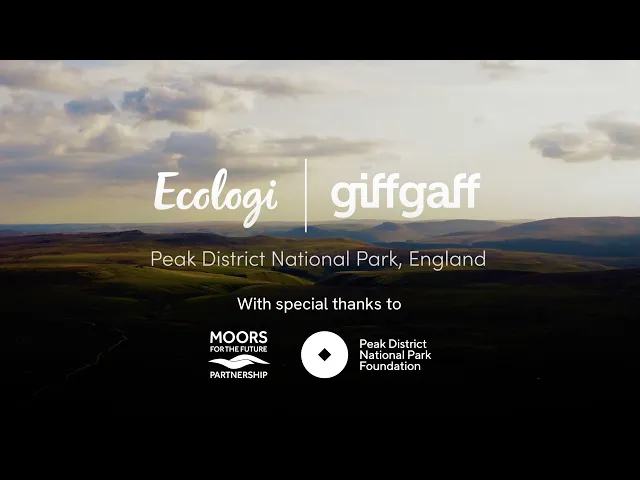
For giffgaff, this led to a £250,000 investment in the restoration of the Eastern Moors in the Peak District.
At first glance, this peatland restoration project might appear to be a purely environmental initiative, supporting biodiversity on the moors. In reality, supporting healthy peatlands in this area is in the interest of their target customer base across the region, especially in Manchester and Sheffield. By supporting a project that is designed to help protect homes and businesses downstream, giffgaff is choosing to invest in projects that support their customers, demonstrating a desire to make business work for the good of people and the planet.
Virgin Media O2: investing in nature as critical infrastructure
For Virgin Media O2, nature restoration is not simply a biodiversity initiative. It is increasingly becoming part of a broader resilience strategy.
In 2026, the company joined the Media in Service of Nature (MISN) movement, becoming a strategic partner alongside Ecologi, giffgaff and MG OMD. Through the initiative, Virgin Media O2 committed to directing a proportion of its advertising spend towards projects that strengthen biodiversity, support nature recovery and improve community resilience.
The partnership builds upon the company's wider Green Transition Plan and Responsible Business Plan, both of which recognise the growing risks that climate change and nature loss pose to infrastructure, operations and the communities the business serves.
Rather than treating restoration as a standalone activity, Virgin Media O2 and Ecologi developed a framework built around four stages:
understanding climate and nature risks;
identifying the company's most vulnerable assets;
matching those risks to appropriate nature-based solutions;
measuring environmental and resilience outcomes.
The analysis focused on threats such as flooding, extreme weather, overheating and soil subsidence across key sites throughout the United Kingdom. Projects were then selected according to their ability to deliver measurable benefits to both ecosystems and local communities.
One example is the Thames Headwaters Flood Resilience Project, delivered in partnership with Surrey Wildlife Trust and the South East Rivers Trust. The project combines river restoration, floodplain reconnection, riparian planting and habitat creation to slow water movement, improve water quality and strengthen biodiversity across the wider Thames catchment.
Virgin Media O2 also explored interventions designed to protect important infrastructure serving London, including wetland restoration, peatland recovery, natural water storage and the installation of leaky dams to reduce peak river flows during major rainfall events.
This reflects a profound shift in thinking. Nature is no longer being viewed simply as a charitable cause or a mechanism for carbon sequestration. Instead, it is increasingly recognised as an essential component of long-term business resilience.
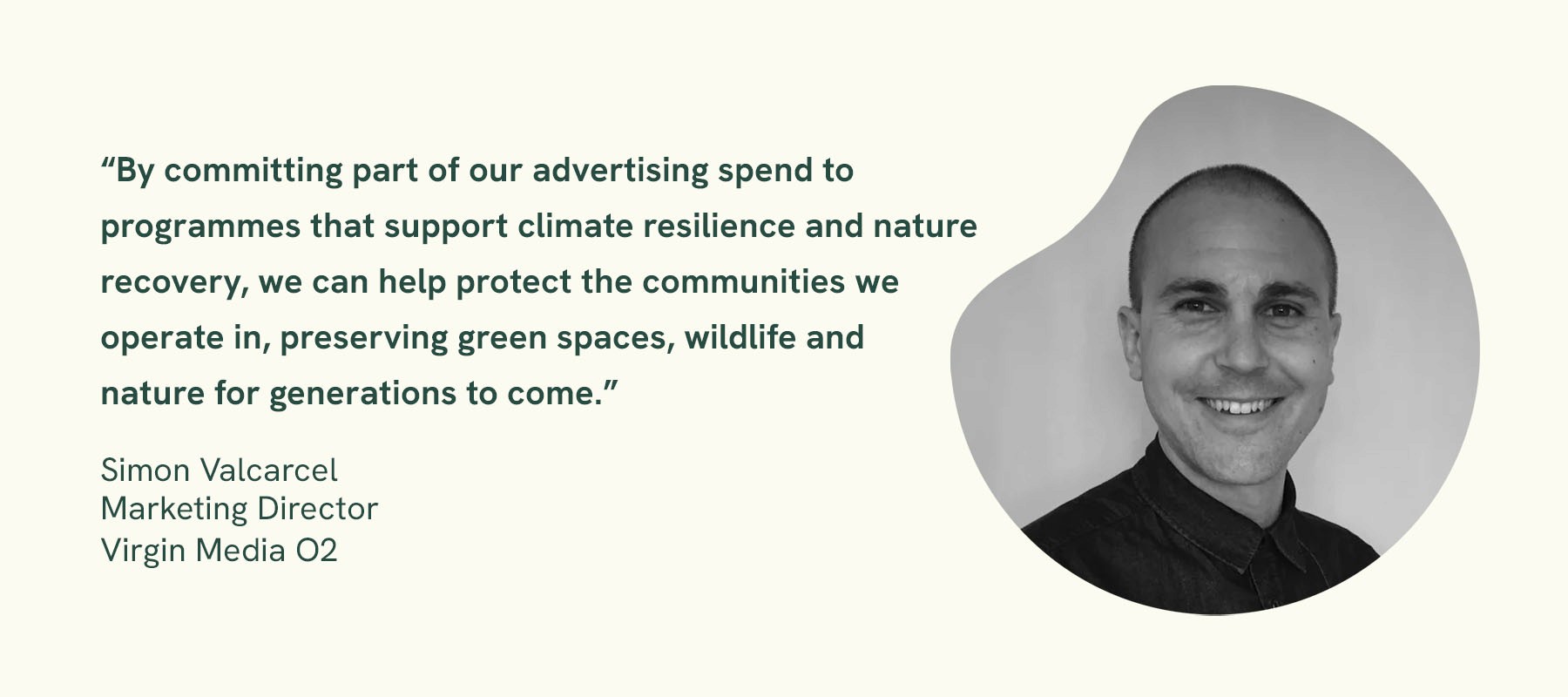
As Simon Valcarcel, Marketing Director at Virgin Media O2, explained:
The future of resilience is nature-positive
Climate resilience and ecosystem resilience can no longer be treated as separate challenges.
Flooding, drought, water scarcity, extreme heat, biodiversity loss and supply-chain disruption are interconnected risks affecting the landscapes, communities and ecosystems on which businesses depend. And, as we’ve seen over the summer of 2026, the disruption is well under way.
The organisations that thrive in the coming decades will not be those that simply reduce their environmental impact. They will be the organisations that recognise nature as critical infrastructure and invest accordingly.
That means understanding dependencies, identifying vulnerabilities, restoring ecosystems and measuring progress transparently, and doing so rapidly to avoid further damage to businesses.
Reducing emissions will remain essential. But as the experiences of giffgaff and Virgin Media O2 demonstrate, restoration also has an important role to play in strengthening resilience.
The question is therefore no longer whether businesses depend upon nature.
The question is whether the natural systems upon which they depend will continue to provide the stability, resources and protection needed for long-term success. Taking action now to protect and restore these systems is vital.