Blog

How to create a Carbon Reduction Plan. A complete guide for UK businesses

Climate 101

Reduce and Report

Blog

How to create a Carbon Reduction Plan. A complete guide for UK businesses

Climate 101

Reduce and Report

How to create a carbon reduction plan
David Rothera

Head of Decarbonisation Solutions

10 min read
How to create a carbon reduction plan

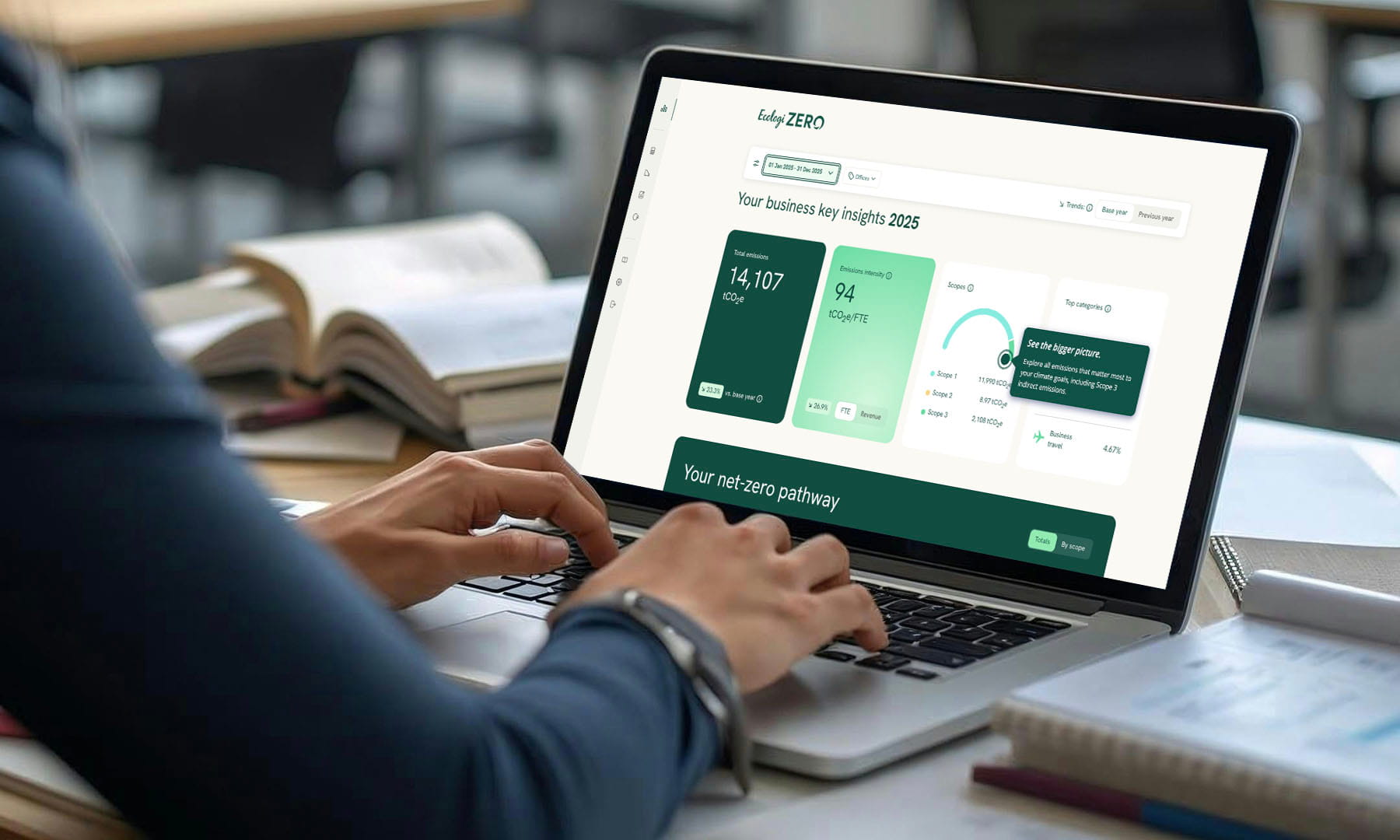
A carbon reduction plan (CRP) is a public document that sets out how your business will measure, reduce, and report its greenhouse gas emissions on the path to net-zero. It covers your current emissions baseline across Scopes 1, 2, and 3, your reduction targets, the specific actions you're taking, and a commitment to reporting progress annually.

For most businesses, building a carbon reduction plan starts with a trigger. A B Corp assessment requires one. An SBTi submission needs the emissions baseline first. A large client adds it to the supplier questionnaire. A government tender specifies it. However it lands, the questions follow: who owns this, what does it need to include, and how do you build something credible?

This guide covers who needs a carbon reduction plan, what it must include, and how to build one that goes beyond minimum compliance.

What is a carbon reduction plan?

A carbon reduction plan is a structured, publicly accessible document committing your business to measuring its greenhouse gas emissions, reducing them against a defined target, and reporting progress annually.

The format was formalised through the UK Government's Procurement Policy Note 006 (formerly PPN 06/21), which made CRPs a condition of eligibility for certain public sector contracts. The document must be published on your company website. That transparency is deliberate: it allows procurement teams and clients to assess credibility rather than take your word for it.

A CRP is not the same as a net-zero strategy. A net-zero strategy is broader, covering the long-term transformation of your operations, supply chain, and business model. A carbon reduction plan is more focused: it answers specific questions about where your emissions stand today, what you're committed to reducing, and how you'll demonstrate that over time.

A carbon reduction plan is a structured, publicly accessible document committing your business to measuring its greenhouse gas emissions, reducing them against a defined target, and reporting progress annually.

The format was formalised through the UK Government's Procurement Policy Note 006 (formerly PPN 06/21), which made CRPs a condition of eligibility for certain public sector contracts. The document must be published on your company website. That transparency is deliberate: it allows procurement teams and clients to assess credibility rather than take your word for it.

A CRP is not the same as a net-zero strategy. A net-zero strategy is broader, covering the long-term transformation of your operations, supply chain, and business model. A carbon reduction plan is more focused: it answers specific questions about where your emissions stand today, what you're committed to reducing, and how you'll demonstrate that over time.

Who needs a carbon reduction plan?

Central government suppliers

Since September 2021, any business bidding for a UK central government contract worth £5 million or more per year has needed a published CRP. Without one, your bid won't qualify.

Public sector spending represents approximately 45% of UK GDP (HM Treasury, 2023). Routing the CRP requirement through procurement was deliberate: it's one of the most direct levers available to shift business behaviour at scale. SMEs asked to provide carbon data are 3.9 times more likely to prioritise net-zero over the following 12 months than those who haven't been asked (British Business Bank, October 2025).

NHS suppliers

From April 2024, the NHS expanded the requirement. All NHS suppliers now need a CRP, regardless of contract value. For contracts under £5 million, a published net-zero commitment on your website currently satisfies the minimum.

That's worth pausing on. A 30-word statement is not a carbon reduction plan. It's a temporary minimum for a narrow subset of NHS contracts. As policy tightens, the full CRP requirement will extend. Getting ahead of it now is the commercially sensible call.

Supply chain pressure

PPN 006 applies to public contracts, but the expectation is spreading. Larger businesses facing their own SECR, B Corp, or SBTi obligations increasingly ask suppliers for carbon data and reduction commitments. In some industries, a CRP is becoming standard in client questionnaires, sitting alongside insurance certificates and financial accounts.

Only 16% of UK SMEs currently consider net-zero a high priority for the year ahead (British Business Bank, October 2025). That figure will shift. Getting your plan in place before you're asked positions you ahead of the curve.

For a full picture of which disclosure obligations apply to your business, our guide on whether you need to disclose your carbon emissions covers the landscape in detail.

Central government suppliers

Since September 2021, any business bidding for a UK central government contract worth £5 million or more per year has needed a published CRP. Without one, your bid won't qualify.

Public sector spending represents approximately 45% of UK GDP (HM Treasury, 2023). Routing the CRP requirement through procurement was deliberate: it's one of the most direct levers available to shift business behaviour at scale. SMEs asked to provide carbon data are 3.9 times more likely to prioritise net-zero over the following 12 months than those who haven't been asked (British Business Bank, October 2025).

NHS suppliers

From April 2024, the NHS expanded the requirement. All NHS suppliers now need a CRP, regardless of contract value. For contracts under £5 million, a published net-zero commitment on your website currently satisfies the minimum.

That's worth pausing on. A 30-word statement is not a carbon reduction plan. It's a temporary minimum for a narrow subset of NHS contracts. As policy tightens, the full CRP requirement will extend. Getting ahead of it now is the commercially sensible call.

Supply chain pressure

PPN 006 applies to public contracts, but the expectation is spreading. Larger businesses facing their own SECR, B Corp, or SBTi obligations increasingly ask suppliers for carbon data and reduction commitments. In some industries, a CRP is becoming standard in client questionnaires, sitting alongside insurance certificates and financial accounts.

Only 16% of UK SMEs currently consider net-zero a high priority for the year ahead (British Business Bank, October 2025). That figure will shift. Getting your plan in place before you're asked positions you ahead of the curve.

For a full picture of which disclosure obligations apply to your business, our guide on whether you need to disclose your carbon emissions covers the landscape in detail.

What must a carbon reduction plan include?

PPN 006 specifies the minimum content. A compliant plan must address all of the following:

  1. A net-zero commitment with a specific target year (2050 at the latest)

  2. A baseline year and total emissions for that year, broken down by Scope 1, Scope 2, and relevant Scope 3 categories

  3. Current emissions performance updated annually to show progress against the baseline

  4. Short-term reduction targets for Scopes 1 and 2, covering the period to 2030

  5. Specific reduction measures with clear timelines

  6. Reporting methodology referencing GHG Protocol standards and UK Government emission conversion factors

  7. A director or senior leader signature confirming accuracy and commitment

  8. A publication date, with the plan republished within 6 months of each financial year end

PPN 006 specifies the minimum content. A compliant plan must address all of the following:

  1. A net-zero commitment with a specific target year (2050 at the latest)

  2. A baseline year and total emissions for that year, broken down by Scope 1, Scope 2, and relevant Scope 3 categories

  3. Current emissions performance updated annually to show progress against the baseline

  4. Short-term reduction targets for Scopes 1 and 2, covering the period to 2030

  5. Specific reduction measures with clear timelines

  6. Reporting methodology referencing GHG Protocol standards and UK Government emission conversion factors

  7. A director or senior leader signature confirming accuracy and commitment

  8. A publication date, with the plan republished within 6 months of each financial year end

How to create a carbon reduction plan: step by step

Step 1: Measure your carbon footprint

You can't set credible targets without knowing where you stand. Your carbon footprint covers three scopes: direct emissions from sources you own (Scope 1), indirect emissions from the energy you purchase (Scope 2), and all other indirect emissions in your value chain (Scope 3): business travel, purchased goods and services, supply chain, and more.

Scope 3 is where most businesses get stuck. The common assumption is that it requires a full value chain analysis. For PPN 006 purposes, it doesn't. You currently only need to report on 5 key categories; waste, business travel, commuting and homeworking, upstream and downstream transportion. However, under the NHS evergreen framework this is changing in 2027 and they will require businesses to report on all relevant Scope 3 emissions. 

Our guide to measuring and managing your corporate carbon footprint walks through the methodology step by step. Ecologi's carbon accounting platform handles the calculation to GHG Protocol standards, producing an output that's audit-ready from day one.

Step 2: Set your net-zero target date

The minimum requirement is a commitment to achieve net-zero by 2050. In practice, businesses taking climate seriously are setting earlier interim targets: 2040 or 2035 for Scope 1 and 2 is increasingly the norm.

Your target should be informed by science, not negotiated down to the lowest possible ambition. The Science Based Targets initiative (SBTi) provides the most rigorous framework for targets aligned with the 1.5°C Paris Agreement pathway. Our guide to setting science-based targets explains what the SBTi process requires.

Step 3: Define your reduction measures

This is the section that separates credible plans from template documents.

Reduction measures should be specific: timelines, named owners, and a clear link to the emission source they address. Vague commitments don't satisfy procurement assessors and don't hold your business accountable.

Strong measures look like this:

  • Switch to 100% renewable electricity tariff by Q1 2027, projected Scope 2 reduction: 38 tCO2e per year

  • Replace diesel company fleet with EVs by December 2027, projected Scope 1 reduction: 22 tCO2e per year

  • Engage top 10 suppliers on emissions reporting by March 2027 (Scope 3 Category 1: Purchased Goods and Services)

Our 20 impactful climate actions for 2026 gives a practical starting list across all three scopes.

Step 4: Assign ownership and commit to annual review

A carbon reduction plan without an owner is just a document. Assign a named individual responsible for updating emissions data, tracking progress on each measure, and republishing within 6 months of your financial year end.

Step 1: Measure your carbon footprint

You can't set credible targets without knowing where you stand. Your carbon footprint covers three scopes: direct emissions from sources you own (Scope 1), indirect emissions from the energy you purchase (Scope 2), and all other indirect emissions in your value chain (Scope 3): business travel, purchased goods and services, supply chain, and more.

Scope 3 is where most businesses get stuck. The common assumption is that it requires a full value chain analysis. For PPN 006 purposes, it doesn't. You currently only need to report on 5 key categories; waste, business travel, commuting and homeworking, upstream and downstream transportion. However, under the NHS evergreen framework this is changing in 2027 and they will require businesses to report on all relevant Scope 3 emissions. 

Our guide to measuring and managing your corporate carbon footprint walks through the methodology step by step. Ecologi's carbon accounting platform handles the calculation to GHG Protocol standards, producing an output that's audit-ready from day one.

Step 2: Set your net-zero target date

The minimum requirement is a commitment to achieve net-zero by 2050. In practice, businesses taking climate seriously are setting earlier interim targets: 2040 or 2035 for Scope 1 and 2 is increasingly the norm.

Your target should be informed by science, not negotiated down to the lowest possible ambition. The Science Based Targets initiative (SBTi) provides the most rigorous framework for targets aligned with the 1.5°C Paris Agreement pathway. Our guide to setting science-based targets explains what the SBTi process requires.

Step 3: Define your reduction measures

This is the section that separates credible plans from template documents.

Reduction measures should be specific: timelines, named owners, and a clear link to the emission source they address. Vague commitments don't satisfy procurement assessors and don't hold your business accountable.

Strong measures look like this:

  • Switch to 100% renewable electricity tariff by Q1 2027, projected Scope 2 reduction: 38 tCO2e per year

  • Replace diesel company fleet with EVs by December 2027, projected Scope 1 reduction: 22 tCO2e per year

  • Engage top 10 suppliers on emissions reporting by March 2027 (Scope 3 Category 1: Purchased Goods and Services)

Our 20 impactful climate actions for 2026 gives a practical starting list across all three scopes.

Step 4: Assign ownership and commit to annual review

A carbon reduction plan without an owner is just a document. Assign a named individual responsible for updating emissions data, tracking progress on each measure, and republishing within 6 months of your financial year end.

Carbon reduction plan template: key sections

Section

What to include

Company details

Name, registered number, website, publication date

net-zero commitment

Target year and any interim milestones

Baseline emissions

Year, total tCO2e, Scope 1/2/3 breakdown

Current emissions

Most recent year's figure, % change vs baseline

Reduction targets

Near-term (by 2030) Scopes 1 and 2; long-term net-zero date

Reduction measures

Specific actions, timelines, projected emissions impact

Reporting methodology

GHG Protocol reference, DEFRA factors, any third-party verification

Signatory

Director name, role, signature, date

For a more detailed walkthrough, you can download our free guide to delivering a carbon reduction plan. If you need a PPN 006-compliant plan for a specific tender, our PPN 006 solution provides structured support from our carbon accountants.

Section

What to include

Company details

Name, registered number, website, publication date

net-zero commitment

Target year and any interim milestones

Baseline emissions

Year, total tCO2e, Scope 1/2/3 breakdown

Current emissions

Most recent year's figure, % change vs baseline

Reduction targets

Near-term (by 2030) Scopes 1 and 2; long-term net-zero date

Reduction measures

Specific actions, timelines, projected emissions impact

Reporting methodology

GHG Protocol reference, DEFRA factors, any third-party verification

Signatory

Director name, role, signature, date

For a more detailed walkthrough, you can download our free guide to delivering a carbon reduction plan. If you need a PPN 006-compliant plan for a specific tender, our PPN 006 solution provides structured support from our carbon accountants.

Common mistakes that get carbon reduction plans rejected

Most are avoidable.

A net-zero commitment in place of a full plan. A single sentence stating you're committed to net-zero by 2050 is one line of a much longer document. Procurement assessors know what a full CRP looks like.

Missing Scope 3. PPN 006 requires Scope 3 reporting. Plans covering only Scopes 1 and 2 are incomplete. You don't need all 15 categories, only those required under the PPN 006 framework.

An outdated publication date. A plan from 2022 or 2023 signals your climate commitment isn't being actively managed.

Vague reduction measures. "We will look to reduce our energy use" is not a reduction measure. You need a specific action, a delivery timeline, and a projected emissions impact.

No director sign-off. PPN 006 requires a named senior leader to sign the document. No signature, no compliant submission.

Most are avoidable.

A net-zero commitment in place of a full plan. A single sentence stating you're committed to net-zero by 2050 is one line of a much longer document. Procurement assessors know what a full CRP looks like.

Missing Scope 3. PPN 006 requires Scope 3 reporting. Plans covering only Scopes 1 and 2 are incomplete. You don't need all 15 categories, only those required under the PPN 006 framework.

An outdated publication date. A plan from 2022 or 2023 signals your climate commitment isn't being actively managed.

Vague reduction measures. "We will look to reduce our energy use" is not a reduction measure. You need a specific action, a delivery timeline, and a projected emissions impact.

No director sign-off. PPN 006 requires a named senior leader to sign the document. No signature, no compliant submission.

Beyond compliance: the commercial case

Here's what most compliance guides miss.

Among the 74% of UK businesses actively reducing their emissions, nearly all report measurable commercial benefits: revenue growth, cost reduction, customer retention, and staff recruitment (Ecologi, 2026 Climate Commitments Report). Climate action isn't a cost centre. For businesses that take it seriously, it's a commercial lever.

The UK's overall emissions trajectory makes clear why expectations around CRPs will only tighten. UK territorial emissions fell to 413.7 MtCO2e in 2024, 50.4% below 1990 levels, but the Climate Change Committee found that only 61% of the reductions needed by 2030 are covered by credible government plans (CCC, June 2025). Business action isn't optional to close that gap.

A carbon reduction plan is the entry point. The businesses pulling ahead don't stop at the plan. They use it as the foundation for science-based targets, supply chain engagement, and addressing residual emissions through high-integrity carbon credits. That progression is the logic behind Ecologi's 3Rs platform approach: Reduce your emissions, Restore our planet, Report on your progress.

To understand how UK sustainability standards fit together (SECR, B Corp, SBTi, and where a CRP sits within all of that), see our guide to UK corporate sustainability standards.

Here's what most compliance guides miss.

Among the 74% of UK businesses actively reducing their emissions, nearly all report measurable commercial benefits: revenue growth, cost reduction, customer retention, and staff recruitment (Ecologi, 2026 Climate Commitments Report). Climate action isn't a cost centre. For businesses that take it seriously, it's a commercial lever.

The UK's overall emissions trajectory makes clear why expectations around CRPs will only tighten. UK territorial emissions fell to 413.7 MtCO2e in 2024, 50.4% below 1990 levels, but the Climate Change Committee found that only 61% of the reductions needed by 2030 are covered by credible government plans (CCC, June 2025). Business action isn't optional to close that gap.

A carbon reduction plan is the entry point. The businesses pulling ahead don't stop at the plan. They use it as the foundation for science-based targets, supply chain engagement, and addressing residual emissions through high-integrity carbon credits. That progression is the logic behind Ecologi's 3Rs platform approach: Reduce your emissions, Restore our planet, Report on your progress.

To understand how UK sustainability standards fit together (SECR, B Corp, SBTi, and where a CRP sits within all of that), see our guide to UK corporate sustainability standards.

Build your carbon reduction plan with Ecologi

A carbon reduction plan takes most businesses four to eight weeks to complete properly, from first emissions measurement to published document. The most common barrier is knowing where to start.

Ecologi's 3Rs platform gives you everything in one place: a GHG Protocol-aligned carbon accounting tool, support from our carbon accountants, and the infrastructure to update your plan every year. If you need a plan in place for an upcoming tender, our PPN 006 compliance solution takes you from first measurement to published document, with expert support throughout.

Create your carbon reduction plan with Ecologi

A carbon reduction plan takes most businesses four to eight weeks to complete properly, from first emissions measurement to published document. The most common barrier is knowing where to start.

Ecologi's 3Rs platform gives you everything in one place: a GHG Protocol-aligned carbon accounting tool, support from our carbon accountants, and the infrastructure to update your plan every year. If you need a plan in place for an upcoming tender, our PPN 006 compliance solution takes you from first measurement to published document, with expert support throughout.

Create your carbon reduction plan with Ecologi

Related articles

Frequently asked questions

Does every UK business need a carbon reduction plan?

Not currently. CRPs are mandatory for businesses bidding for central government contracts worth £5 million or more per year, and for all NHS suppliers from April 2024. Private sector businesses have no legal obligation, but supply chain pressure means the expectation is growing across most industries.

What's the difference between a carbon reduction plan and a net-zero strategy?

A CRP is a specific compliance document with a defined structure, mandatory content, and a public publication requirement. A net-zero strategy is broader: it describes your overall approach to transforming operations and contributing to global climate goals. The CRP is usually the first formal document businesses produce; the net-zero strategy builds on it.

How often does a carbon reduction plan need to be updated?

Annually, within 6 months of your financial year end. Each update should show your latest emissions data, progress against previous targets, and reduction measures for the year ahead.

Can a subsidiary use its parent company's carbon reduction plan?

Yes, under specific conditions: the parent's CRP must explicitly name the subsidiary, cover its emissions, and be publicly accessible. This is a temporary arrangement; subsidiaries bidding independently should develop their own plan.

Does a carbon reduction plan need to include Scope 3 emissions?

Yes. You don't need to cover all 15 Scope 3 categories, only those material to your business. For most SMEs, that's five to eight. Our corporate carbon footprint guide covers materiality assessment in detail.

Frequently asked questions

Does every UK business need a carbon reduction plan?

Not currently. CRPs are mandatory for businesses bidding for central government contracts worth £5 million or more per year, and for all NHS suppliers from April 2024. Private sector businesses have no legal obligation, but supply chain pressure means the expectation is growing across most industries.

What's the difference between a carbon reduction plan and a net-zero strategy?

A CRP is a specific compliance document with a defined structure, mandatory content, and a public publication requirement. A net-zero strategy is broader: it describes your overall approach to transforming operations and contributing to global climate goals. The CRP is usually the first formal document businesses produce; the net-zero strategy builds on it.

How often does a carbon reduction plan need to be updated?

Annually, within 6 months of your financial year end. Each update should show your latest emissions data, progress against previous targets, and reduction measures for the year ahead.

Can a subsidiary use its parent company's carbon reduction plan?

Yes, under specific conditions: the parent's CRP must explicitly name the subsidiary, cover its emissions, and be publicly accessible. This is a temporary arrangement; subsidiaries bidding independently should develop their own plan.

Does a carbon reduction plan need to include Scope 3 emissions?

Yes. You don't need to cover all 15 Scope 3 categories, only those material to your business. For most SMEs, that's five to eight. Our corporate carbon footprint guide covers materiality assessment in detail.

Is your business ready
to take climate action?

If this article has inspired your business to start its climate journey, talk to our team today.

Is your business ready
to take climate action?

If this article has inspired your business to start its climate journey, talk to our team today.

Is your business ready
to take climate action?

If this article has inspired your business to start its climate journey, talk to our team today.